
Books & Audiobooks


Header art by Emil Wilson
This week marks Canadian HIV/AIDS Awareness Week leading up to World AIDS day on December 1. Whether you are looking for an accessible introduction to the history of AIDS in North America or an emotional coming of age story, both of these new graphic novels are worth checking out.

Bitter Pill: Randy Shilts and the Dawn of the HIV/AIDS Epidemic
by Clément Xavier
Bitter Pill brings to life the story of a journalist navigating a pivotal moment for his community and the country. Randy Shilts—one of the first openly gay reporters hired by a mainstream publication—is perhaps most remembered for his acclaimed account of the early days of the AIDS crisis: And the Band Played On: Politics, People, and the AIDS Epidemic (1987). This story starts in 1981 when he is hired by the San Francisco Chronicle and explores his early reporting on the disease. Aiming to minimize the spread of the disease, his call to close bathhouses in the city was met with criticism by some in the community that saw discussions of the disease being used to sideline villainize and further marginalize the gay community. With the help of a doctor working at the Centre for Disease Control, Shilts learns that there is information about AIDS being kept from the public. He is shown as resolute in his efforts to spread awareness of the disease as the media begins framing Canadian flight attendant Gaétan Dugas as “patient zero” for the epidemic.
Throughout the book, Shilts is not presented as a hero, but neither is he an outright villain. The result is a compassionate exploration of the pressures Shilts faced in balancing his personal convictions with criticism from his community, government secrecy, and mainstream media’s need for a concise story to sell to the public. Héloïse Chochois’ illustrations add depth to the story as they transition from vibrant colours of a pride march into dreary grays as awareness of the realities of the crisis grows as the book process. This is an accessible introduction for those unfamiliar with Shilts’ story and the early days of the AIDS epidemic in North America.
View Book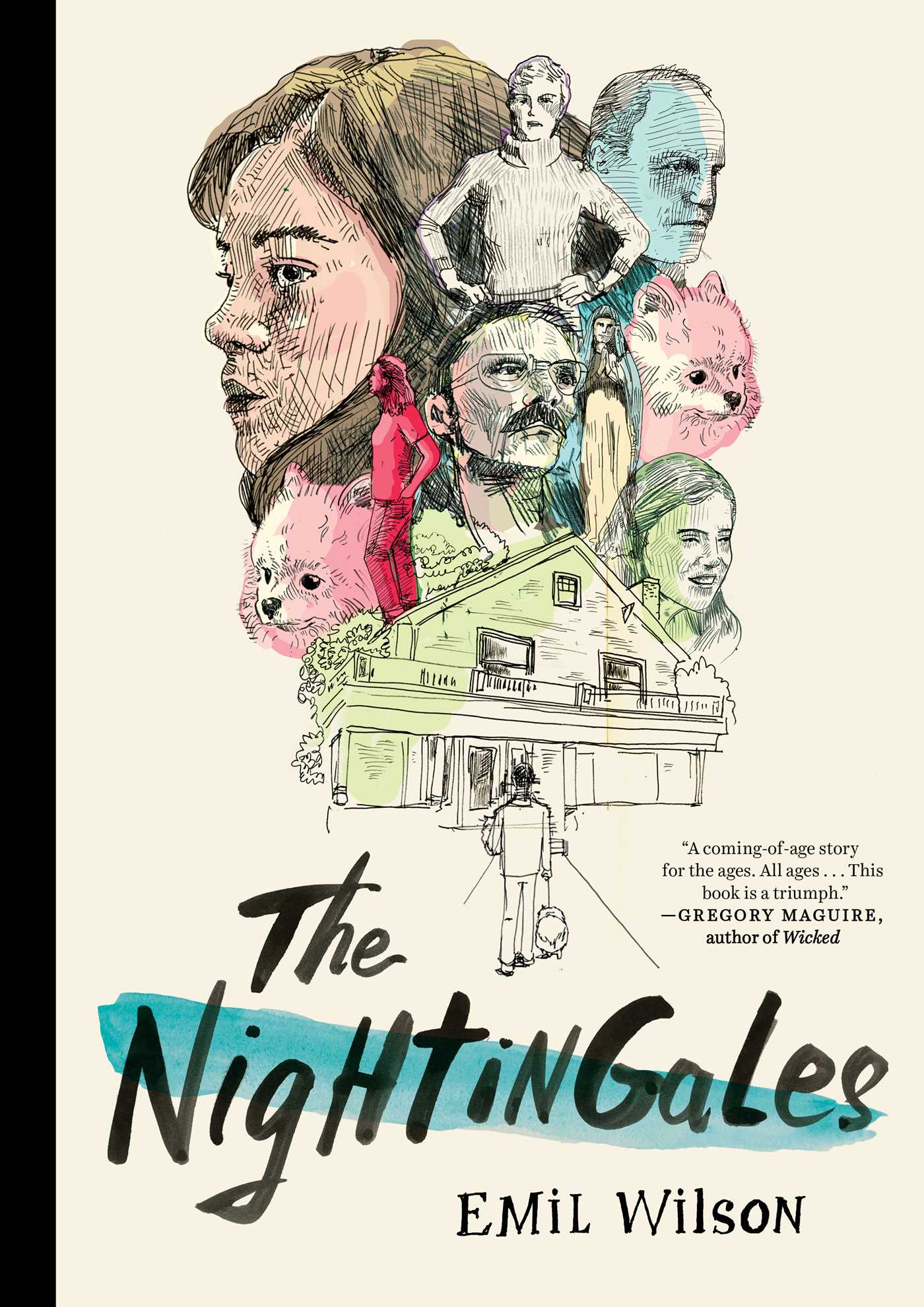
The Nightingales
by Emil Wilson
Based on real events, The Nightingales is a visually and emotionally striking coming of age story set during the AIDS epidemic in small-town Oregon. For Lou, Emil Wilson’s younger sister, “memory has always looked like a sketchbook” (p.6). Through the intricately rendered pages of her journal, the story of an unlikely friendship unfolds when her father, Donald, invites his coworker Jim and his two Pomeranians to move into their home after he is evicted from his apartment. It quickly becomes clear that Jim is sick, but the AIDS crisis still feels unknown and far away from their small town. Jim’s sudden presence in their home is met with a mounting fear and resentment from Lou’s mother, Annemarie. As she tensions within the home rise, Lou finds an unlikely friend in Jim. He talks to Lou like she is a grown-up and through his recollections of living as a gay man in pre-AIDS New York she finds inspiration to pursue her own dreams.
Emil Wilson’s own experiences volunteering with Gay Men’s Health Crisis in New York find their way into the book, creating a thoughtful and compassionate portrayal of Jim. This is an intimate exploration of an imperfect family confronting an unexpected and unfamiliar circumstance. It balances emotional depth with moments of everyday humour and humanity to create a captivating story.
View Book