
Books & Audiobooks
Getting Started
Visit any WPL location to receive your very own 1000 Books Before Kindergarten Reading Map, then start reading. We will celebrate your milestones with incentives and lots of encouragement. Plus we’ll keep you supplied with lots of books you’re sure to love. It’s really that simple!
Frequently Asked QuestionsParent with toddler reading a picturebook at the library
More Literacy Activities to Do Together
Explore Play Learn is our approach to the American Library Association’s Every Child Ready to Read™ program. Engaging in reading, writing, singing, playing and talking activities together will help build your child’s literacy skills for life.
The Five Practices and Early Literacy Components are part of the Every Child Ready to Read initiative which are properties of PLA, the Public Library Association, and ALSC, the Association for Library Service to Children, divisions of the American Library Association.
-
Reading Activities
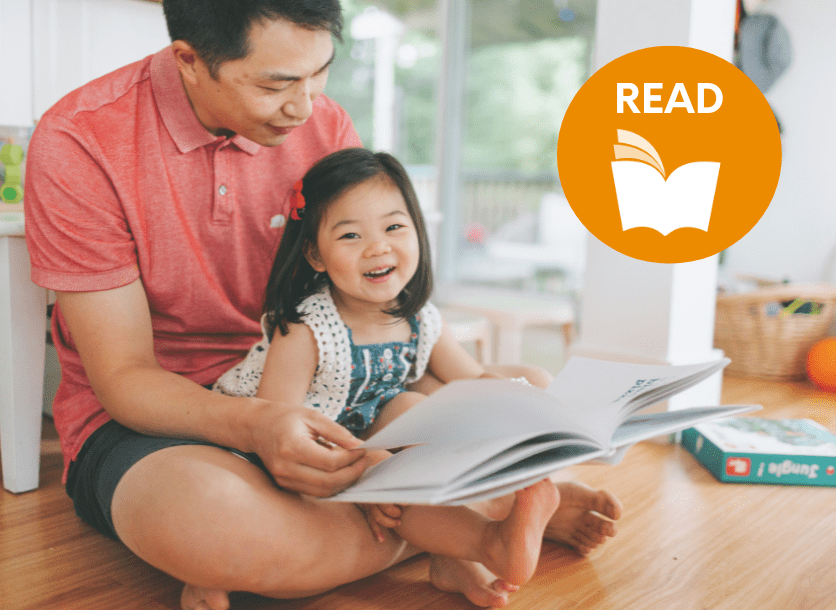
Shared reading is the most important activity to help children get ready to read, whether they’re 1 month or four years old.
Activity 1
Use fridge magnets or other letter manipulatives (foam bath letters, letters written on paper and shuffled up, etc.) to help your child learn to spell their name. Sound out their name with them and help them find the letters and arrange them in the correct order.
If your child already knows their name, do the same activity with their last name or other members of the family.Activity 2
Make your child their own book. Cut or fold paper to make a small booklet and help them think of a story to write. Help them to write or scribble the words or write the words yourself. Have them draw pictures. If your child is too young to draw or even scribble on the pages, practice holding the book, turning the pages, and pretending to read aloud from their book.
Activity 3
When going for a walk or a drive, go through the alphabet and pick a letter (maybe the first letter of your child’s name). Look around at your surroundings and see how many things you can name that start with that letter. Once you’ve found everything, pick a different letter and play again. Another variation is listing things that end with that letter.
-
Writing Activities
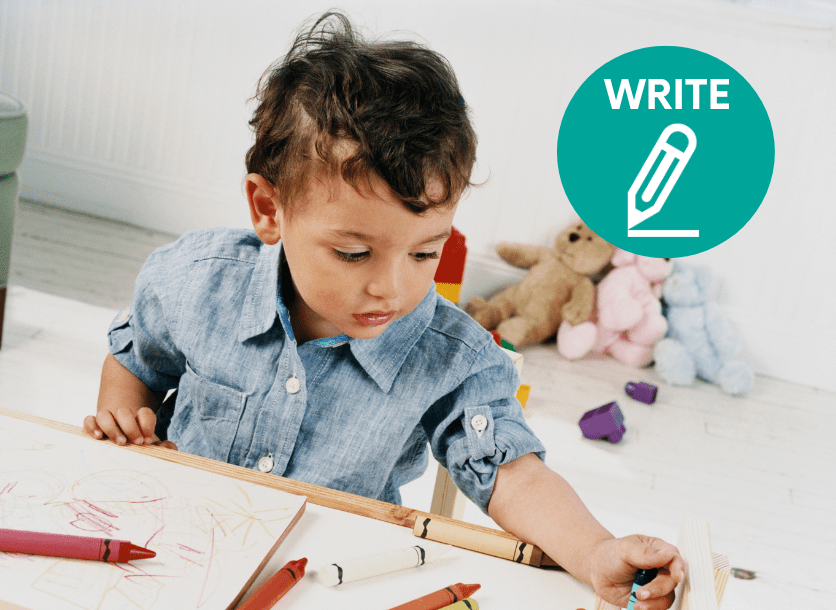
Writing involves both fine and gross motor skills, and it requires plenty of practice to develop.
Activity 1
Use playdough to help your toddler make different letters. You can use the same dough to make a letter, squish it, then start again. Try making all the letters of their name, their favourite food, or favourite animal. A variation is to use a popsicle stick to trace the letter onto a flat mound of playdough. Help them use their finger to trace the letter and become familiar with it.
Activity 2
Write large letters on black paper with both the upper case and lower case. Give your child a Q-Tip with paint, a dot marker, or beads, and have them mark the letter, helping them understand the way the letter curves and changes. Afterwards, discuss all the things you can think of that start or end with that letter.
Activity 3
Use construction paper or cardstock, and punch holes with a hole punch on one side, making sure the holes are close together. Using an old shoelace, have them practice pushing and pulling the lace through the holes, as a fine motor activity.
-
Singing Activities
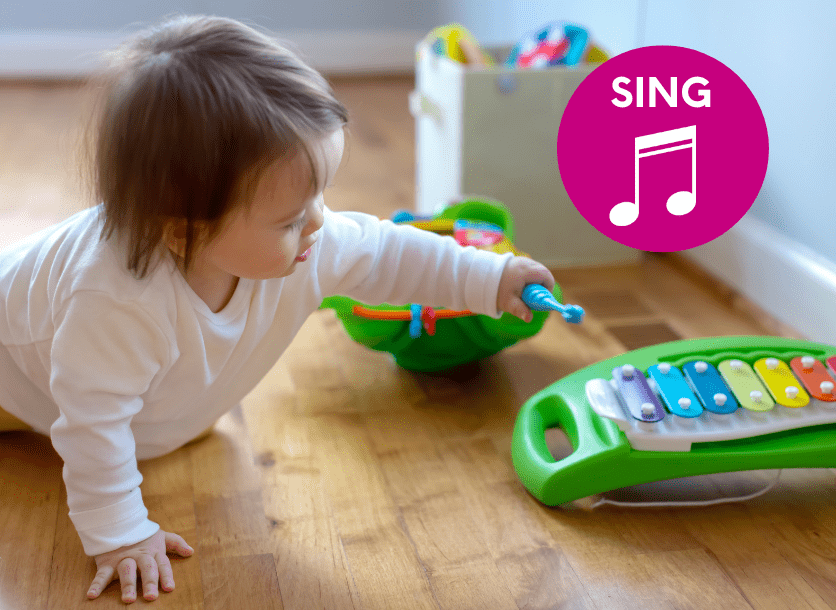
Singing slows down language so kids can hear the sounds in each word. It also helps them learn new words.
Activity 1
Make 4 different stations around your house, with each station representing different things. Have one station designated for each: fast, slow, loud, quiet.
Pick a song to sing with your child and sing it in different ways every time you move to each of the new stations.Activity 2
Make your own instrument by taking either a paper plate or empty tissue box. Add three elastics to it and strum them to your own beat. Pick a song and sing it to the beat of your own instrument.
Activity 3
Practice singing songs that help kids practice their numbers and ABCs.
Examples include:
- Zoom Zoom Zoom
- 5 Little Monkeys Jumping on the Bed
- The Ants Go Marching
- One, Two, Buckle My Shoe
- The ABC Song (practice singing it to different tunes like Mary Had a Little Lamb or London Bridge is Falling Down)
- B-I-N-G-O
-
Talking Activities

Talking to kids encourages them to understand what they will eventually read; open-ended questions can help, reading and retelling stories, and having open discussions.
Activity 1
Go for a walk in different parts of your neighbourhood (for example, a quiet street and a park). Talk about the similarities and differences in those two different parts of the neighbourhood. Ask your child what sounds they heard and whether they heard any animal sounds.
Activity 2
Pick an item in your home that has multiple rhymes to it (mat, door, shoe, milk, etc.) and each list of as many rhyming words as you can. Make it a game and see who can list the most!
Activity 3
After a trip somewhere (grocery store, walk, visit to grandma’s, etc.), ask your child to retell the whole trip to you from start to finish. Encourage them to use sequential words like first, second, then, last, etc.
-
Play Activities
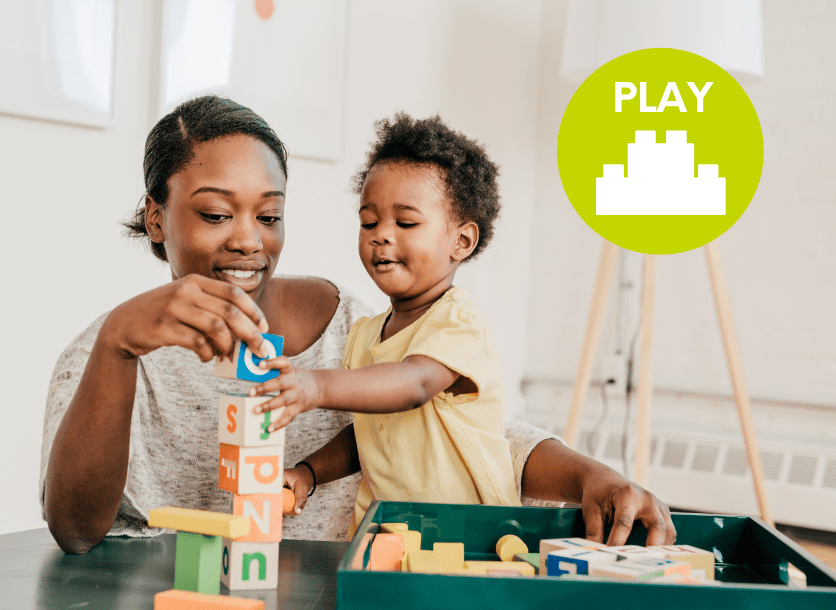
Play is an integral part of a child’s literacy development as different kinds of play help develop language.
Activity 1
Play I Spy with your child. Give them clues that focus on language, like, “I spy something that rhymes with red,” or “I spy something that starts with the SH sound.”
Activity 2
Teach new vocabulary through movement play. Hang up signs around the house that invite them to move in different ways, like take off gracefully like a hot air balloon, paddle a canoe, drive a bus and make a stop, make the sound of an ambulance, and spin like a helicopter. Have your child go through the different centers and use this opportunity to explain new words, using movement to help explain.
Activity 3
Play pretend games like restaurant or grocery store. Have your child play the adult role like server or cashier and help them design a menu, or price out produce, or set up the layout of the grocery. Pretend to be the customer or shopper in the store and have fun with your child who is now in charge.
Reading List
Enjoy a selection of books that encourage reading, writing, singing, talking and playing.
FAQs
-
How do I sign up?
-
What do we do when we complete 100 books on our map?
-
How do we keep track of our books when there are only 5 circles around each set of 100 books?
-
Are there prizes at each milestone or at each 100 books read?
-
Is there a deadline?
-
Is there a required reading list?
-
Can we read the same book multiple times?
Looking for more early learning initiatives?
We offer a wide range of programs, reading initiatives and resources tailored for babies, toddlers and kindergarten readiness.